





9.2
1309 reviews in the last 12 months
97% recommends us

Blog article
It’s the height of summer and temperatures are climbing toward 35°C. Your home heats up like a greenhouse, mainly through the windows. So how do you keep that heat out? In this article, we compare the most popular solutions, from screens and shutters to window film and curtains, so you can make the best choice for your situation.

Windows act like a magnifying glass: they let sunlight in, but trap the heat it generates inside. This greenhouse effect is the main reason why it can sometimes be warmer indoors than outside. The larger your window surface, the stronger this effect becomes. Especially with large sliding doors, skylights, or glass extensions, temperatures in a room can rise by 10 to 15 degrees on sunny days.
The most effective way to prevent this? Stop the heat before it reaches your windows. External sun shading is always the most effective, but interior solutions can also make a significant difference.
80,000+ satisfied customers went before you
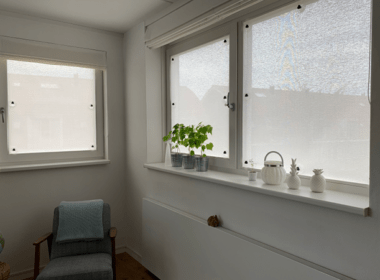
Not everyone can or wants to install sun shading on the outside. Think of rental homes, apartments, or hard-to-reach windows. With indoor solutions, it’s important that the shading sits as close to the glass as possible. Curtains are often too far from the window, causing heat to build up between the fabric and the glass. Window film, on the other hand, is applied directly to the glass, which causes the glass itself to heat up and radiate warmth indoors.
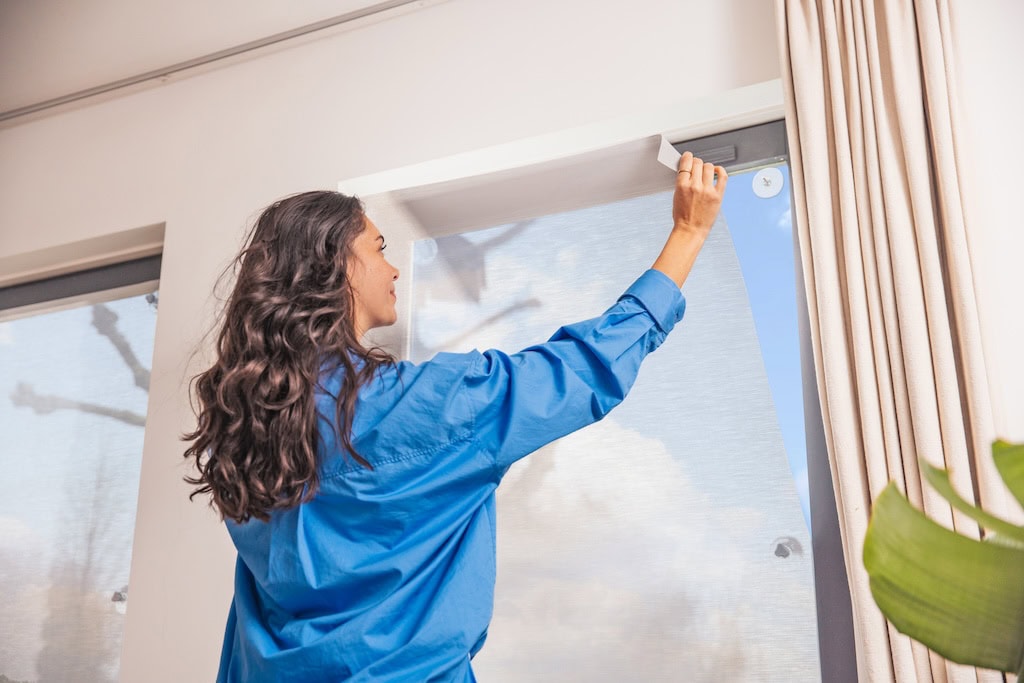
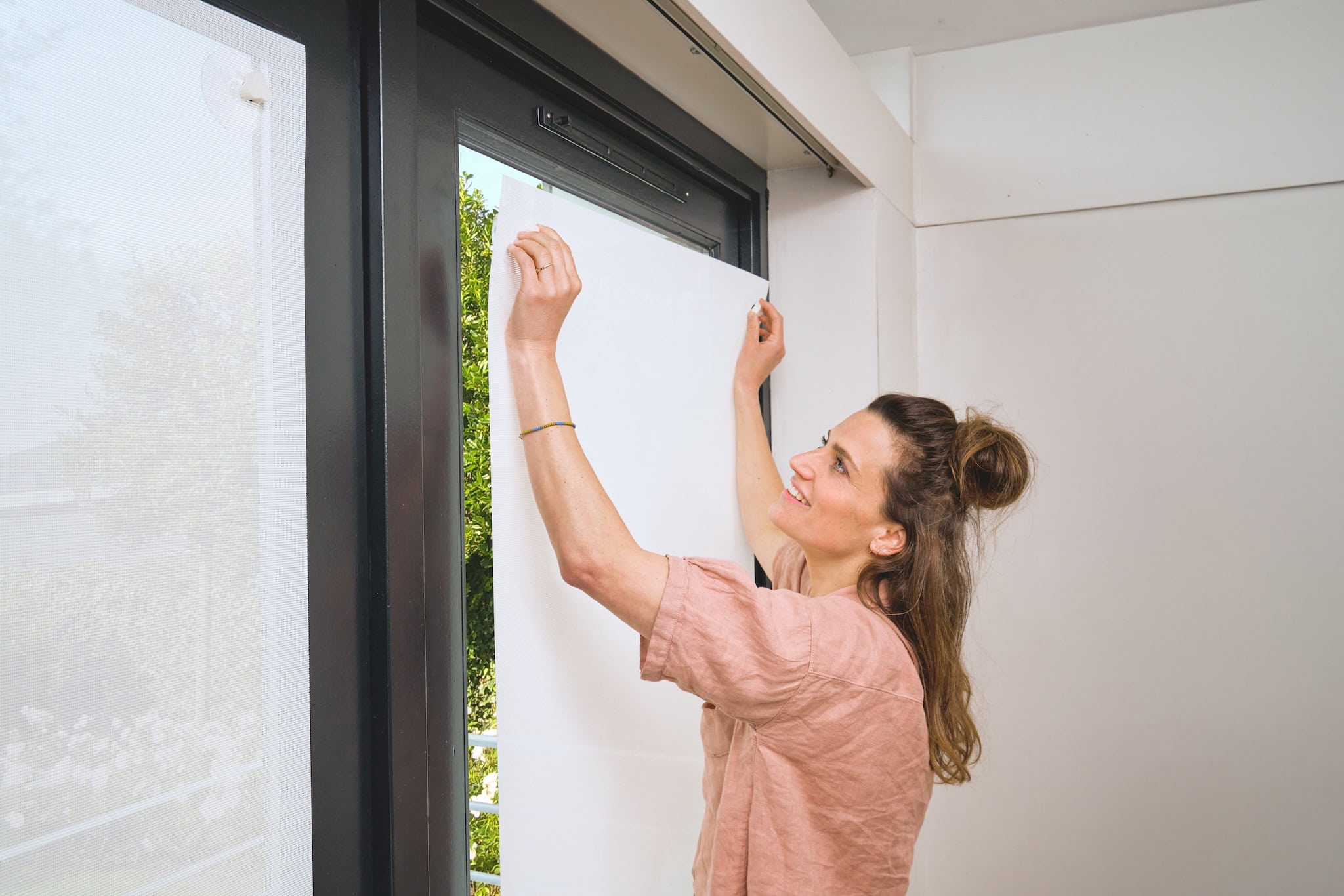
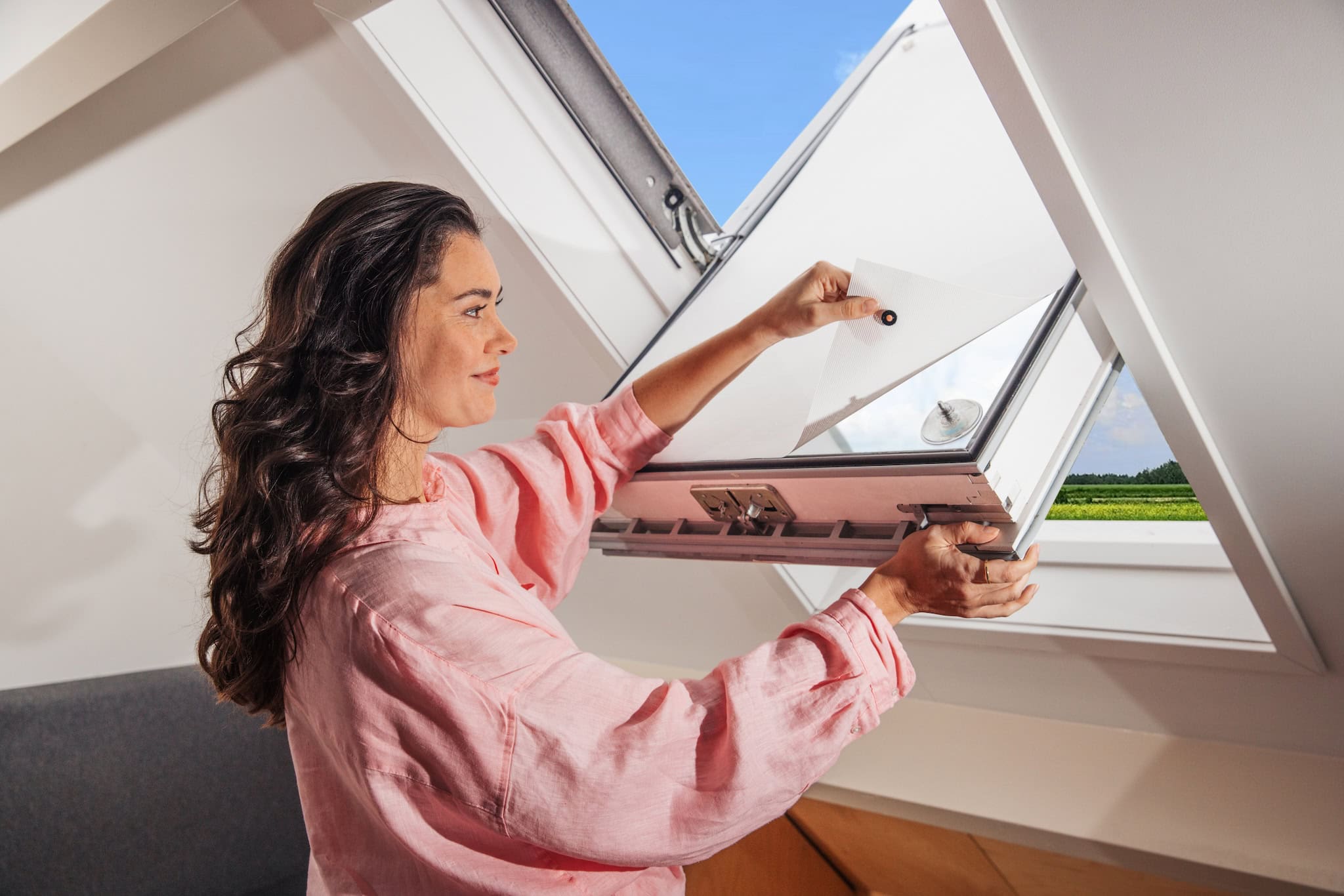
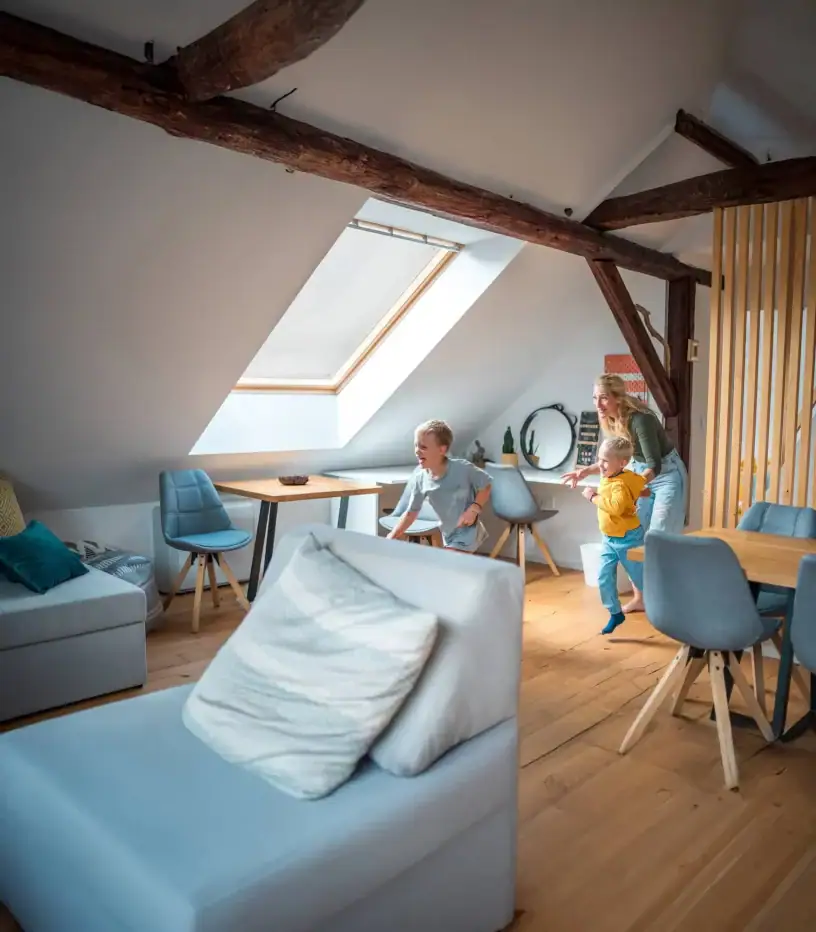
Suction cup sun shading offers the best of both worlds. The screen is attached directly to the glass with vacuum suction cups, but sits about 2 cm away from the window. This blocks sunlight before it enters the room, without the glass itself heating up significantly.
A light-colored screen also reflects solar heat, meaning it hardly heats up and doesn’t release warmth into the room, unlike curtains or window film.
And no drilling is required, making it ideal for rental homes, apartments, and listed buildings.
The three most popular solutions to block heat through windows are screens, shutters, and heat-reducing window film. Below are the key differences, including effectiveness, delivery time, and suitability for HR++ glass.
| Screens with suction cups | Shutters (electric) | Heat-reducing window film | |
|---|---|---|---|
| Heat reduction (external installation): | 97% | 100% | Up to 60% |
| Heat reduction (indoor installation): | Noticeable difference | N/A | Up to 60% |
| Light transmission: |
Maintained (Optimal View) or reduced (Maximum Sunblock) |
Fully blocked | Maintained |
| Installation: | DIY, in 15 minutes | Professional required |
DIY, but difficult to apply without air bubbles |
| Drilling required: |
No (vacuum suction cups on glass) |
Yes | No |
| Removable: | Yes, without leaving marks | No, permanent | Difficult, often leaves residue |
| Suitable for rental homes: | Yes | No | Not ideal (adhesive residue) |
| Suitable for uPVC frames: |
Yes (attaches to glass, not the frame) |
Yes (with drilling) | Yes |
| Non-standard window shapes: | Non-standard window shapes: | No | Limited |
| Price per window: | From €25 per screen | From €200 | From €15 |
| Lifespan: | Years (reusable, seasonal storage) | 10+ years | 2–5 years (may discolor) |

A common question: do curtains actually help against heat? The honest answer: hardly. Curtains hang too far from the window, allowing sunlight to still enter the room while heat builds up between the glass and the fabric.
In addition, curtains absorb some of that heat and release it back into the room. As a result, the overall effect on temperature is limited.
Heat-reducing window film performs better than curtains, as it is applied directly to the glass and reflects part of the sunlight. However, window film has some serious drawbacks: the glass itself heats up (with a risk of cracks), it’s difficult to apply without air bubbles, loses effectiveness after a few years, is not suitable for HR++ glass, and can leave marks when removed. For rental properties, window film is therefore not a good option.
Tip: alternative to window film
Looking for a flexible alternative to heat-reducing window film? Suction cup sun shading offers better heat reduction, is easy to remove, and leaves no marks. You can measure everything yourself, no installer is needed, and delivery takes just 3 to 5 business days.
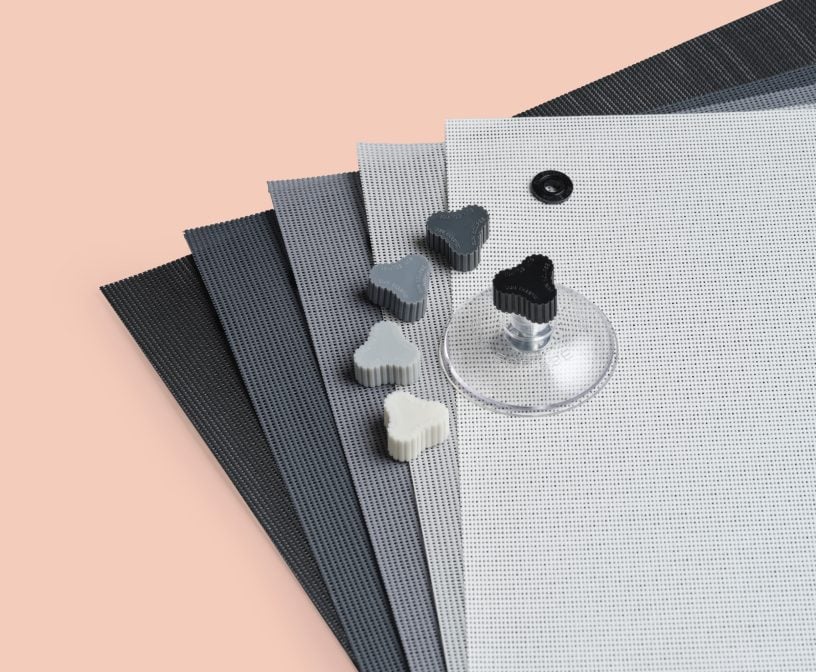
The color of your screen affects its heat performance. The principle is similar to clothing: a black T-shirt absorbs heat, while a white T-shirt reflects it.
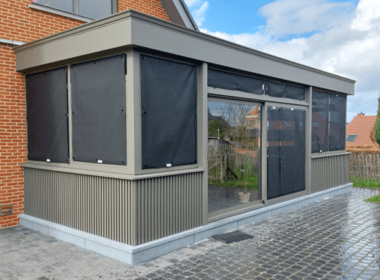
For outdoor installation: choose darker colors (Anthracite, Black, or Concrete). Dark screens absorb the heat and release it outside before it reaches the glass. An added benefit: better visibility to the outside.
For indoor installation: choose lighter colors (White or Boulder). Light screens reflect sunlight, so they hardly heat up and don’t release warmth into the room.
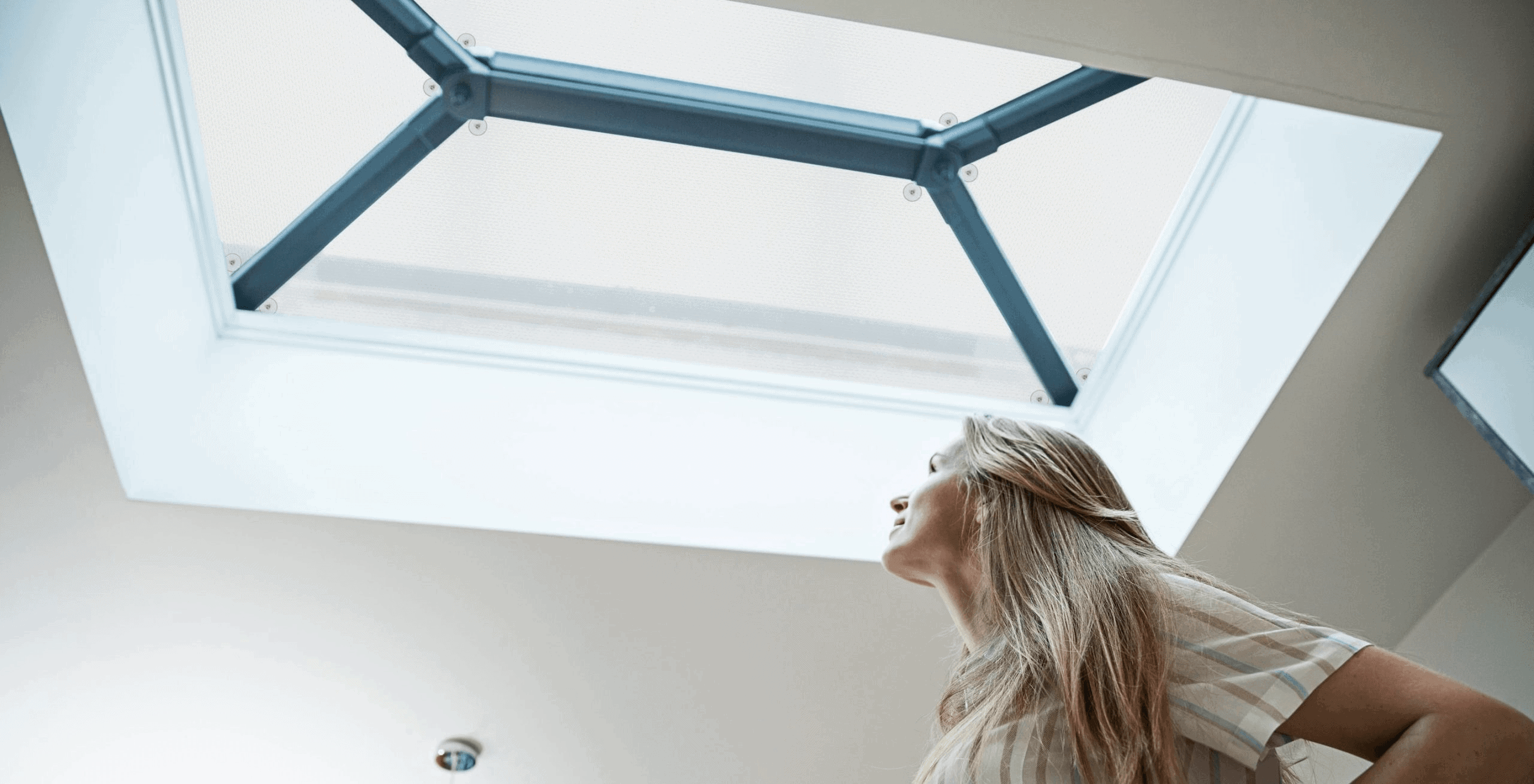
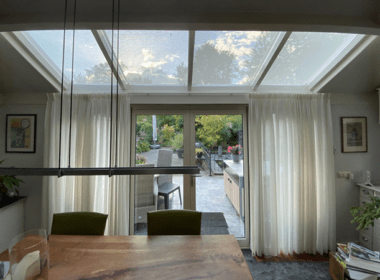
For slanted windows and skylights, we always recommend a white screen. Due to the angle, the screen partly rests against the glass. White screens reflect a large portion of the heat and therefore stay cooler.
Dark screens, on the other hand, absorb more heat and transfer it to the glass, causing it to heat up faster. This can create tension in the glass and, in some cases, even lead to cracks.
Not every space requires the same type of sun shading. The right choice depends on three factors: how much heat you want to block, how much unwanted light you want to reduce, and how important your view to the outside is.
| Room | Recommended type | Why? |
|---|---|---|
| Bedroom / children’s room | Maximum Sunblock | Maximum heat reduction + blackout effect for a good night’s sleep |
| Living room / kitchen | Optimal View |
Heat reduction while maintaining natural light and your view. Tip: choose a darker color for the best visibility to the outside |
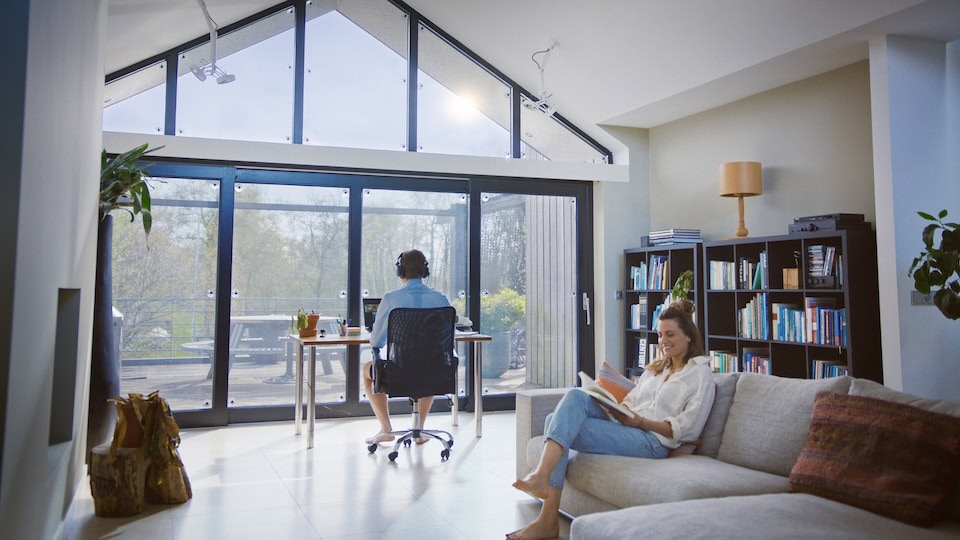
| Home office | Maximum Sunblock | Prevents overheating and reduces glare on your screen |
| Extension / conservatory | Optimal View (dark color) | Best visibility to the outside. Darker color = better view |
| Skylight / flat roof window | Maximum Sunblock (white, required) |
Direct sunlight hits the glass. A white screen prevents the glass from overheating |
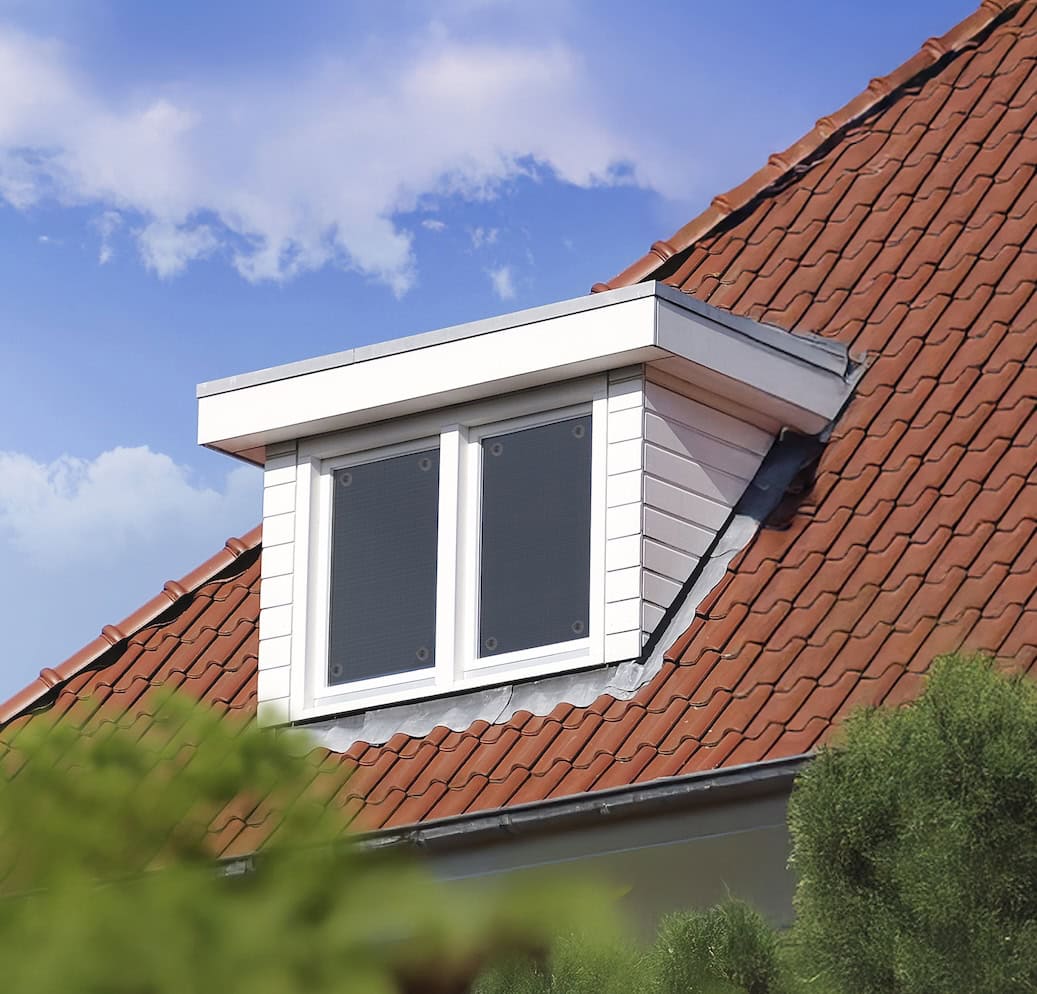
| Dormer / attic | Maximum Sunblock |
The warmest area in the house. Indoor installation is usually the easiest option |
| Hard-to-reach windows | Maximum Sunblock (indoor) | Indoor installation with suction cups — no ladder required |
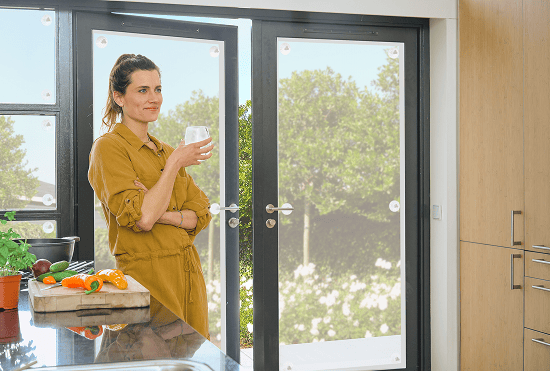
| French doors / sliding doors | Optimal View or Maximum Sunblock |
The screen is mounted directly on the glass and moves with the door — unlike traditional screens |

When it’s extremely hot, the instinct is to open all windows. But that’s not always the smartest move. As long as the outdoor temperature is higher than indoors, opening windows actually lets warm air in.
The rule of thumb: keep windows closed during the day and use sun shading. Only open them when it’s cooler outside than inside, usually in the evening and at night. Then create airflow by opening windows on both sides of your home.
Combine this with proper sun shading, and your home can stay up to 8 degrees cooler.

Good sun shading isn’t just comfortable, it also saves money. By reducing how hard your air conditioning has to work, you can easily save up to €135 per year on energy costs.
Do you have solar panels? During the day, they can power your AC, but in the evening and at night it runs on more expensive grid electricity. By keeping the heat out during the day with screens, you significantly reduce the load on your AC.
Suction cup sun shading is also one of the most affordable solutions on the market, up to 10 to 15 times cheaper than electric screens. No installer needed, no measurement appointments, and no long lead times. You measure it yourself, order online, and receive your screens within 3 to 5 business days.
1309 reviews in the last 12 months
97% recommends us


At Sun Eclipse, we continuously strive to provide our customers with the best possible support. That’s why we’ve collected and answered the most common questions in our FAQ, so you can quickly find answers to any questions you may have.
Sun shading on the outside is the most effective at blocking heat. The Maximum Sunblock screen in a dark color offers up to 97% heat reduction when installed externally. The screen intercepts sunlight before it reaches the glass and releases the heat outside.
Most people find 20 to 22°C comfortable. In bedrooms, 16 to 18°C is ideal for a good night’s sleep. For babies, a bedroom temperature between 16 and 20°C is recommended.
Heat-reducing products are designed to keep heat out. Blackout products block light, but don’t necessarily reduce heat.
The Maximum Sunblock screen combines both: it blocks up to 97% of heat while still maintaining your view to the outside.
Yes, shutters are effective against heat (up to 100%). The downside is that they block all light and completely obstruct your view. Screens offer a strong alternative, allowing you to keep your view and natural light while still reducing heat.
A sheet in front of your window is a temporary solution with limited effect. It blocks some light, but hardly any heat. A sun shading screen is far more effective and also looks much better.
The most effective solution is sun shading placed close to the glass. Suction cup sun shading is mounted about 2 cm from the window, close enough to block sunlight, yet far enough to prevent the glass from heating up.
You can install it yourself in just 15 minutes, without drilling.